
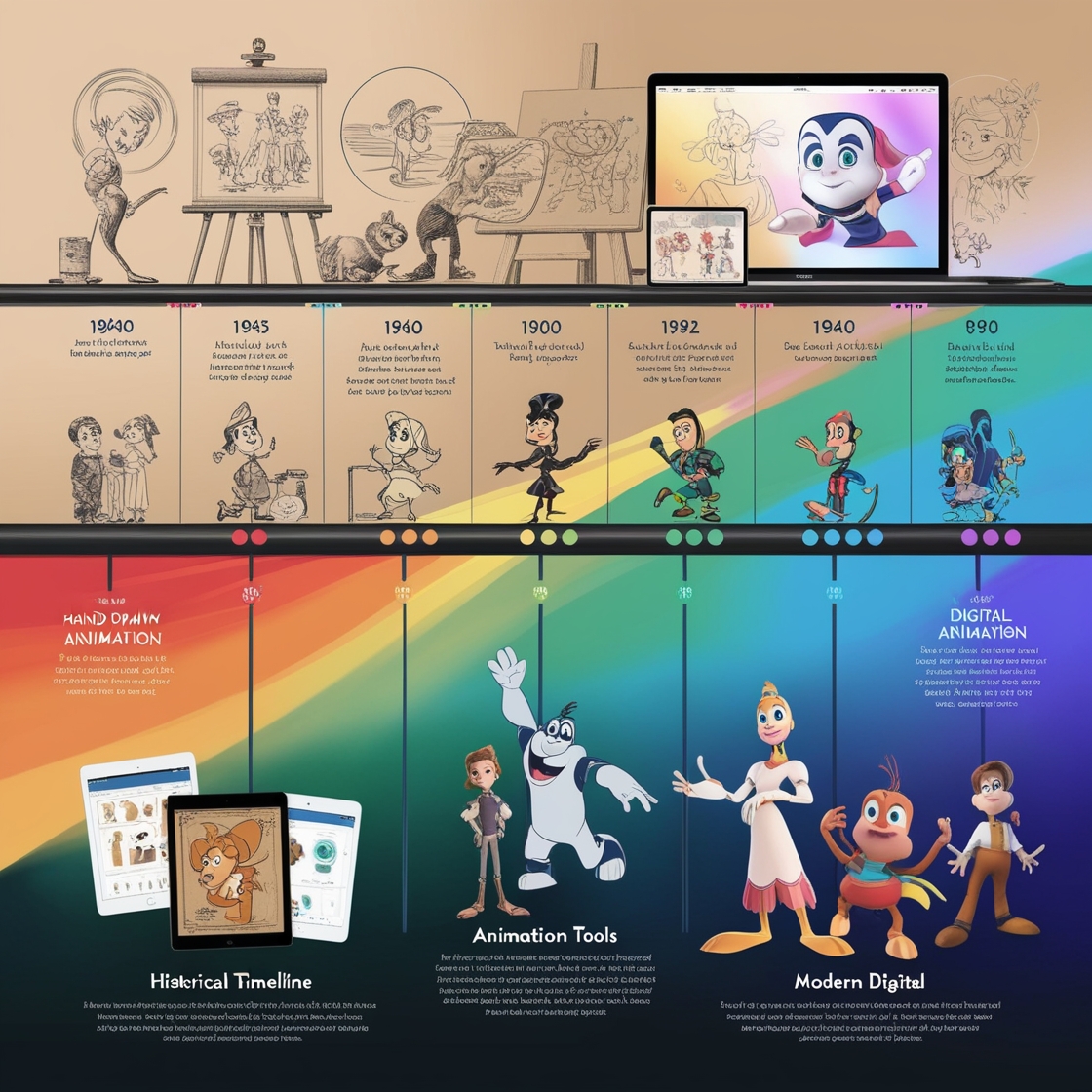
Animation, an art form beloved by many, has undergone an incredible transformation since its inception. From the early days of hand-drawn sketches to the sophisticated digital masterpieces of today, animation has continuously evolved, driven by technological advancements and creative ingenuity. Let’s journey through the fascinating history of animation and explore how it has developed over the years.
The Dawn of Animation: Hand-Drawn Beginnings
The earliest form of animation dates back to the late 19th century, with the invention of devices like the zoetrope and the phenakistoscope. These devices created the illusion of motion by displaying a sequence of drawings in rapid succession. However, it was the advent of film that truly revolutionized animation.
In 1908, Émile Cohl’s “Fantasmagorie,” often considered the first fully animated film, debuted. This short film, made up of 700 hand-drawn frames, showcased the potential of animation as a storytelling medium. The following decades saw the rise of hand-drawn animation, with iconic studios like Walt Disney and Warner Bros. leading the way. Disney’s 1937 feature-length film “Snow White and the Seven Dwarfs” set a new standard for animation, demonstrating the power of compelling narratives combined with exquisite artistry.
The Golden Age: Technicolor and Innovation
The 1930s to 1950s is often referred to as the Golden Age of Animation. During this period, the introduction of Technicolor brought vibrant hues to animated films, further enhancing their appeal. Classic characters like Mickey Mouse, Bugs Bunny, and Tom and Jerry became household names, captivating audiences with their charming antics.
Innovation was at the heart of this era. Animators experimented with new techniques, such as rotoscoping, where live-action footage was traced to create realistic movement. The multiplane camera, pioneered by Disney, allowed for more depth and dimension in animated scenes, making them more visually engaging.
The Transition: From Cel Animation to Computer Graphics
The 1960s and 1970s marked a transitional phase in animation. While traditional cel animation remained popular, the industry began exploring new avenues. The rise of television brought animated series like “The Flintstones” and “Scooby-Doo” into living rooms, diversifying the animation landscape.
The 1980s introduced computer-generated imagery (CGI), signaling a significant shift in animation techniques. Pioneering films like “Tron” (1982) showcased the potential of computer graphics, blending live-action with digital effects. This period also saw the birth of computer animation studios, such as Pixar, which would later revolutionize the industry.
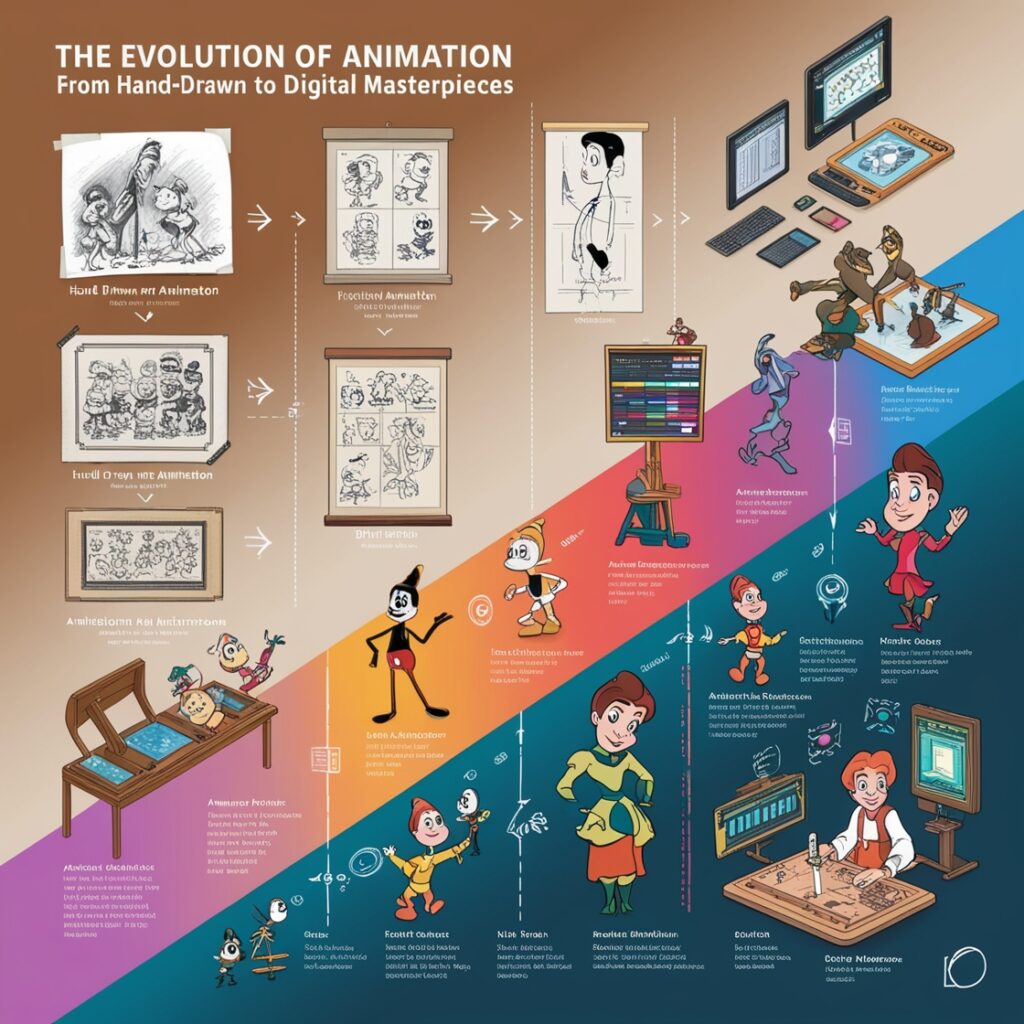
The Digital Revolution: Pixar and Beyond
The 1990s ushered in the digital revolution in animation. Pixar’s “Toy Story” (1995), the first fully CGI-animated feature film, marked a watershed moment. The film’s success demonstrated the immense possibilities of digital animation, combining cutting-edge technology with heartwarming storytelling.
Digital animation opened up new creative horizons. Techniques like motion capture allowed for more lifelike character movements, while advanced rendering software enabled stunning visual effects. Studios like DreamWorks Animation and Blue Sky Studios emerged as major players, producing hits like “Shrek” and “Ice Age.”
The Modern Era: Blending Techniques and Expanding Horizons
Today, animation continues to evolve, blending traditional and digital techniques to create visually stunning and emotionally resonant works. Films like “Spider-Man: Into the Spider-Verse” (2018) push the boundaries of animation, combining hand-drawn aesthetics with CGI to create a unique visual style.
Moreover, animation is no longer confined to feature films and television shows. Video games, virtual reality experiences, and digital platforms like YouTube have expanded the reach of animation, making it an integral part of modern entertainment and culture.
Conclusion: The Future of Animation
As we look to the future, the possibilities for animation offer even more opportunities. Advances in artificial intelligence, real-time rendering, and immersive technologies like augmented reality promise to further transform the art form. However, at its core, animation remains a medium driven by creativity and storytelling.
From the painstakingly hand-drawn frames of the past to the digital masterpieces of today, animation’s evolution is a testament to the ingenuity and passion of its creators. As technology continues to advance, we can only imagine the incredible stories and visual wonders that await us in the world of animation.